


therapy service
Touch Therapy for Trauma Healing in Long Beach, California
Schedule a free & confidential Consult CAll! Click to view calendar

The body remembers what the mind cannot.
Some of Your Oldest Wounds & Most impactful traumas Have No Words
Many of the most painful experiences in life—especially those that occur between birth and age five—live in the body, not in words. Because these experiences happen before we develop language and cognition, they’re stored somatically (nervous system, motor movement, implicit memory). Nearly every person I’ve worked with who seeks support for present-day issues like anxiety, depression, or chronic disconnection has also experienced trauma or a lack of safe, attuned connection in their early years.

unresolved trauma = incomplete movement
trauma therapy MUST involve Touch & Movement
For an experience to become traumatic, there must be some form of immobilization—often physical—and a lack of perceived safety. When we’re unable to fight, flee, brace, or defend ourselves effectively, that survival energy gets stuck in the nervous system and in the fascia (the body’s connective tissue). As infants and young children, even something as simple as reaching for connection and not receiving it can be traumatic.
To truly resolve trauma, the body needs to complete the action it couldn’t take—or receive the kind of nurturing touch and support it never got.
When these survival responses remain stuck or when our natural relational movements aren’t honored, the effects can show up as chronic tension, physical pain or injury, anxiety, depression, dissociation, insecure attachment, or a persistent sense of disconnection from ourselves, our bodies, and others.
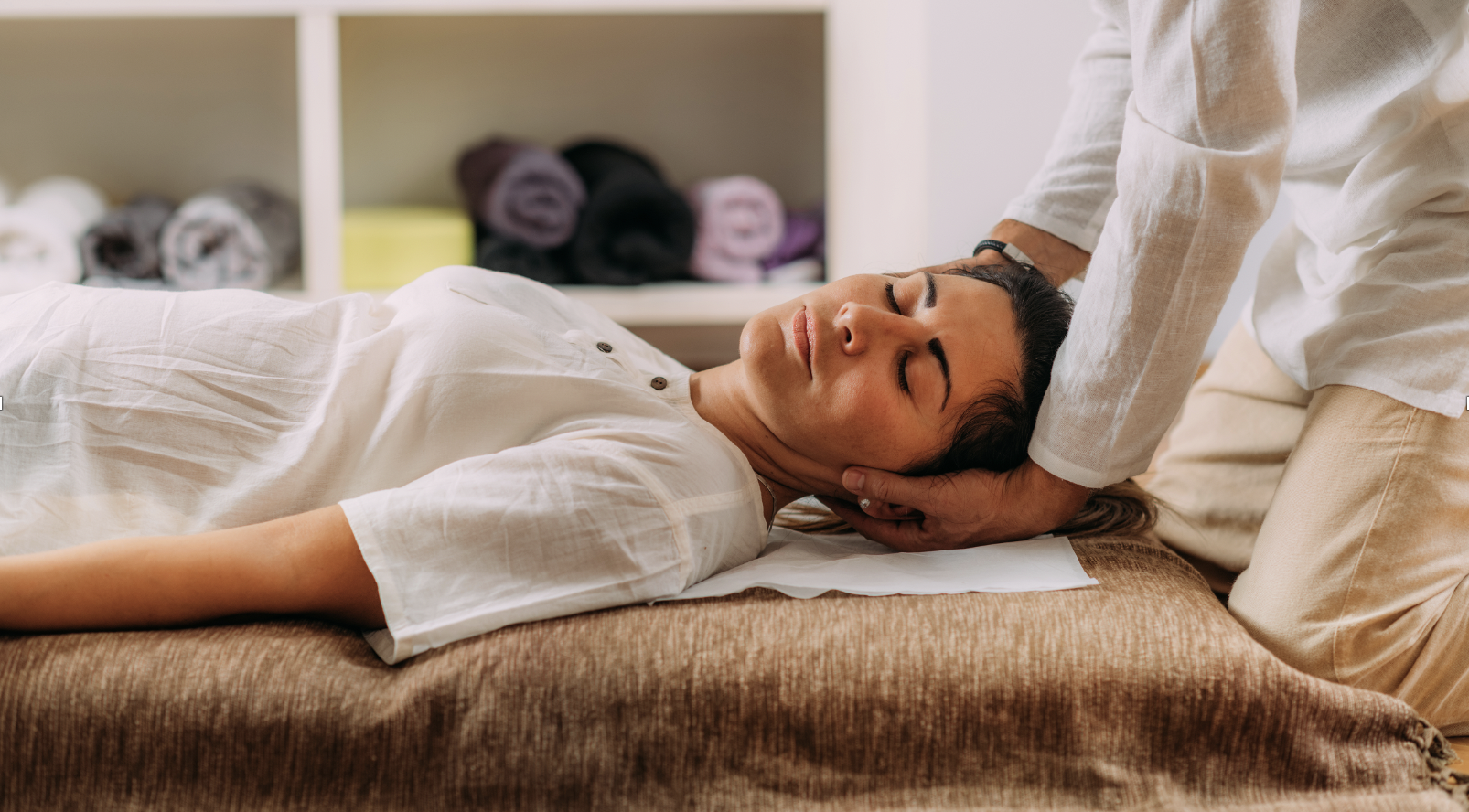
Touch and relational movement are gentle, body-based ways to help your nervous system complete what got stuck.
This work is always trauma-informed, consensual, and titrated—done slowly and with tremendous respect for your body’s timing and wisdom. This is about healing trauma, not creating more of it.
Why this works
trauma therapy MUST involve Touch & Movement
Using techniques from Somatic Experiencing®, NeuroAffective Touch®, CORE Touch, Reiki, and yoga therapy, I offer subtle but powerful interventions that help your body feel safe, supported, and regulated—often without needing words at all … usually the only words spoken are the ones you couldn’t say back then, that you can finally say now.
This approach is for you if …
You struggle to feel safe in your body, even when nothing’s “wrong”
You shut down, freeze, or go numb when overwhelmed
You resist physical touch from loved ones, even though you crave closeness
You feel anxious, heavy, or on edge most of the time
You experience chronic tension or pain that medical tests can't explain
You’ve done talk therapy and made progress—but something still feels unresolved
Deep down, there’s a sense of unmet need, grief, or longing from childhood
What kinds of issues can touch and relational movement help with?
Childhood trauma
unmet needs from childhood
Insecure attachment style
fear of relationships or intimacy
Difficulty with boundaries
Chronic anxiety or depression
chronic dissociation
disconnection from the body
Special note on touch:
Therapy never involves sex, sexual activity, or sexual touch. Additionally, all touch is consensual, collaborative, and optional. You are always in charge of your body, and we will discuss everything beforehand to make sure it feels right for you.
For more on this, please see the FAQs below.


FAQs
you’ve got questions - I’ve got answers
-
Relational movement refers to the simple, embodied ways we reach out, pull back, and move toward or away from others. These patterns are shaped early in life and can profoundly affect how we show up in relationships as adults. When we explore these movements together, your body learns new, healthier ways of connecting—while honoring your boundaries and sense of self.
-
Therapeutic touch involves gentle, intentional, and respectful physical contact that supports your nervous system in releasing stored trauma and restoring regulation. This kind of work draws from modalities like Somatic Experiencing®, NeuroAffective Touch®, CORE Touch, Reiki, and yoga therapy. It helps your body feel safe, supported, and able to complete survival responses that were once interrupted or suppressed.
-
Therapists who are not trained in touch, bodywork, or have specialization in working with trauma through a somatic lens have NO business touching a client because it is outside of their scope of practice. That said, all touch is consensual, collaborative, and optional. You are always in charge of your body, and we will discuss everything beforehand to make sure it feels right for you.
It is important to clarify that therapy sessions will never include any form of sexual activity or sexual touch. More broadly, therapy and trauma healing of any kind between a client/patient (especially a licensed professional) never involves sexual activity or sexual touch.
The therapeutic relationship is built on trust, respect, and professional boundaries, and any violation of this is illegal, unethical, and absolutely unacceptable.
If you have ever experienced a violation of your physical boundaries or felt unable to give full consent due to power dynamics or other circumstances, please reach out for support. Touch work is not appropriate for everyone, and if you have a history of physical violation, we will take the time to process this thoroughly before considering any touch-based or alternative therapy modalities.
-
Touch is always optional, consensual, and discussed in advance. It’s tailored to your comfort level and unique history. For some clients, touch work becomes a powerful part of healing; for others, simply exploring relational movement or imagining touch can offer just as much benefit. You are always in charge of what feels right for you.
-
Each session is tailored to your unique needs, goals, and nervous system. We always begin by checking in—emotionally, physically, and energetically—and co-creating a plan for what feels most supportive that day. Some sessions involve talking, others focus more on body-based practices like tracking sensation, exploring movement, or working with touch (if in person and agreed upon). You’ll always be an active participant in the process, and we move at your pace. Safety, consent, and attunement are at the core of every session.
-
Yes—while hands-on touch isn’t possible in virtual sessions (obviously), we can still work with relational movement, body awareness, and somatic practices that support nervous system regulation and trauma resolution. You can also engage in self-touch with props and imagination. Many clients find that even over video, we can create a deeply attuned and healing experience by exploring your internal sensations, practicing boundaries and movements, and using visualization or self-touch techniques. Healing can still happen—no matter the distance.
If we get to the point where your body is asking for hands-on touch, I will help you find a trauma-focused bodyworker near you and will collaborate with them on a care plan.
-
No. This offering is for individual therapy and offered alongside other relational and trauma-focused modalities I incorporate for individual work.
While I do incorporate somatic work into couples therapy, my primary focus in couples therapy is on the relationship itself, including attachment patterns, communication, conflict cycles, and how each partner's nervous system, parts, and trauma history show up within the dynamic.
-
No. One of the beautiful things about this work is that healing doesn’t have to happen through words. Because much of our early trauma is preverbal and stored in the body, we often don’t have words to describe them … which is exactly why we need to receive touch and allow the body to move on its own! Touch and movement-based approaches can access and release these patterns without needing to relive or retell the story.
-
Yes! Some people like to process out loud, while others prefer silence. There’s no expectation either way—you are welcome to check in, ask questions, or share what you’re noticing at any time. Your comfort and sense of agency are the most important things.
-
Yes, sometimes bodywork can bring up emotions, memories, or physical sensations as your body releases stored tension and trauma. This is a normal and healthy part of the healing process. If anything comes up that feels overwhelming, we will slow down, support regulation, and ensure you feel safe throughout the experience.
-
No. This approach is not massage, chiropractic care, or manual manipulation. Touch work for trauma focuses on nervous system regulation, emotional processing, and restoring a felt sense of safety in the body. Techniques may include gentle, attuned touch to support trauma resolution, fascia unwinding, and energy balancing, depending on what feels right for you.
-
No, this is not like Rolfing, massage, or physical therapy that focus on facias and use deep pressure for intense physical release.
This work is gentle, slow, and attuned to your body’s needs. Therapeutic touch prioritizes safety, regulation, and a sense of ease. The goal is not to force anything but to create space for your body to naturally unwind and process at its own pace. Every session is tailored to what feels comfortable for you.


therapeutic touch for trauma Near me?
I offer Therapeutic Touch and relational bodywork sessions in person at my Long Beach, CA office, located near Belmont Heights and Belmont Shore, or virtually across California. My Long Beach space is calm, flexible, and designed for comfort—ideal for touch-based somatic work, nervous system regulation, and body-centered healing. Looking for trauma therapy using EMDR or somatic approaches?